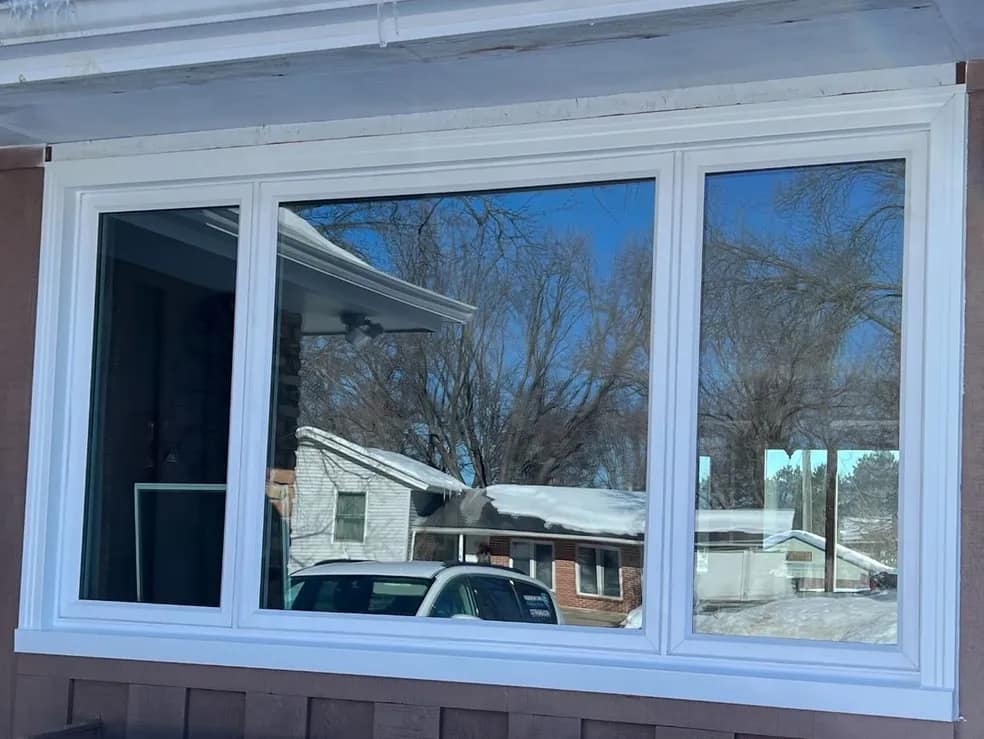
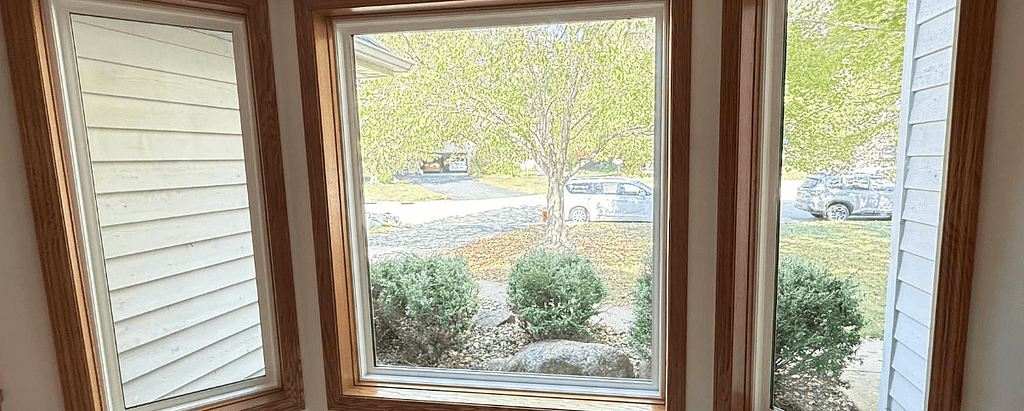
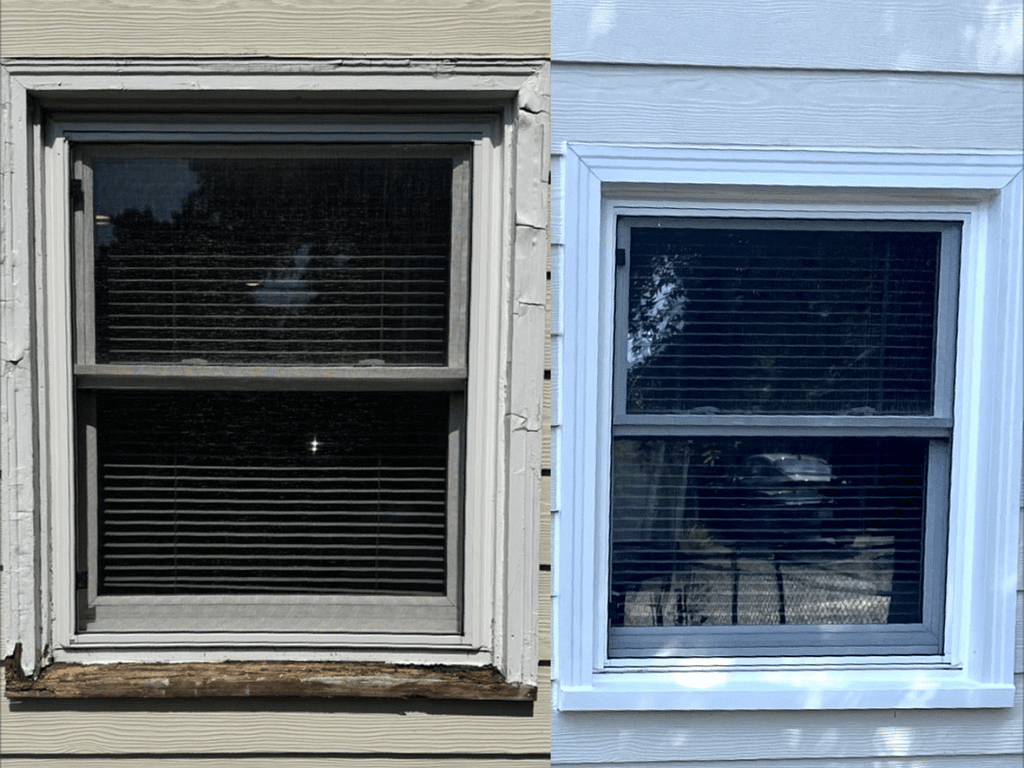
You may have noticed that a window looks relatively clear during warmer weather but becomes cloudy when winter temperatures arrive. The haze may be more visible in the morning, appear to change throughout the day, or seem to collect along the edges of the glass.
For homeowners in Minnesota, this often raises an important question: Is the cold weather causing a problem with the window, or is it revealing something that was already there?
Yes, foggy window glass can look worse in cold weather. Larger temperature differences and changing moisture conditions can make condensation more visible. However, the meaning of that fog depends on where the moisture is forming.
Condensation on the accessible surface of the glass is different from moisture trapped inside a sealed double-pane window. Knowing the difference helps you determine whether the window needs maintenance, improved humidity control, or glass replacement.
Why Can Foggy Windows Become More Noticeable in Winter?
During winter, the temperature difference between the inside and outside of a home becomes much greater.
Warm indoor air meets colder window surfaces, which can cause moisture to condense when the glass temperature falls below the dew point of the surrounding air.
That is why many homeowners notice condensation on the interior surface of their windows during especially cold mornings.
But an insulated glass unit with a failed seal can behave differently.
Double-pane windows are manufactured as sealed glass units. If the edge seal deteriorates, moisture can enter the space between the panes. Changes in temperature can then affect how visible that trapped moisture becomes.
A window may look cloudier on some days and clearer on others without the underlying seal problem having been resolved.
Cold weather can make an existing glass seal failure more noticeable, but it does not prove that the weather caused the seal to fail.
How Can You Tell Where the Fog Is Forming?
Before deciding whether a window needs repair, determine where the moisture is located.
Condensation on the Inside Surface
If the fog is on the room-facing side of the glass, it may be caused by indoor humidity meeting a cold window surface.
You can often wipe this moisture away with a cloth.
This type of condensation does not automatically mean the sealed glass unit has failed.
For example, a bedroom window may develop condensation overnight when the room is closed and temperatures drop outside. A bathroom window may become foggy after a hot shower.
Managing indoor humidity, using ventilation fans, and allowing air to circulate near windows may help reduce the problem.
Moisture Between Double-Pane Glass
If you cannot wipe away the fog from either accessible side of the window, the moisture may be trapped between the panes.
This is a common sign of a failed insulated glass seal.
You may notice a milky haze, tiny droplets, streaks, or a cloudy film that appears to be inside the glass assembly.
Unlike ordinary surface condensation, this moisture cannot be removed through normal cleaning because it is located inside the sealed unit.
Our foggy glass repair service addresses failed insulated glass units and helps determine whether the affected glass can be replaced separately from the rest of the window.
Moisture on the Outside Surface
Condensation can also form on the exterior surface of a window under certain weather conditions.
This is not necessarily a defect. Exterior condensation may appear when the outside glass surface is cooler than the surrounding air’s dew point.
If the moisture is on the exterior surface and disappears as conditions change, it generally does not indicate a failed insulated glass seal.
For a broader explanation, our guide to condensation inside, outside, and between window panes explains how to tell these conditions apart.
What Happens When a Double-Pane Window Seal Fails?
A typical insulated glass unit contains two panes held apart by a spacer and sealed around the edges.
This construction helps reduce heat transfer through the glass.
When the perimeter seal fails, outside air and moisture may enter the space between the panes. The moisture-control materials inside the unit have a limited capacity, so condensation may eventually become visible.
Over time, the glass may develop a persistent haze or deposits that remain even when visible water droplets disappear.
The condition often becomes more noticeable during periods of changing temperature and humidity.
A failed seal does not necessarily mean the frame, sash, or operating hardware is damaged. The defect may be limited to the insulated glass unit itself.
That distinction matters when considering repair options.
Does Cold Weather Make a Failed Window Seal Worse?
Cold temperatures can change the appearance of moisture trapped between window panes, but they do not tell us exactly when or why the seal failed.
Insulated glass seals are exposed to environmental conditions throughout the year, including changes in temperature, sunlight, and moisture.
A unit may develop a seal problem gradually and show relatively few visible symptoms at first.
When winter arrives, condensation inside the unit may become easier to see because the glass temperatures and internal moisture conditions have changed.
The fog may then appear to improve during milder weather.
However, a clearer appearance on a warm afternoon does not mean that the damaged seal has repaired itself.
Once moisture is entering the sealed space, normal window cleaning and household humidity adjustments cannot restore the original sealed construction.
Can Foggy Double-Pane Glass Be Repaired Without Replacing the Window?
In many situations, yes.
If the frame and sash are still in good condition, replacing the failed insulated glass unit may be possible without replacing the entire window.
This allows the existing window structure and operating components to remain in place when they are suitable for continued use.
Before recommending glass replacement, the condition of the sash, glazing materials, frame, and existing glass configuration should be considered.
Accurate measurements and appropriate glass specifications also matter. Insulated glass units can differ in thickness, coatings, spacer details, grid patterns, and other features.
The replacement should be compatible with the existing window system.
Replacing the glass is different from simply removing visible condensation. The goal is to address the failed sealed unit rather than temporarily improving its appearance.
If the sash or frame has significant deterioration, a broader repair or window replacement may be more appropriate.
Should Foggy Glass Be Replaced During Winter or Wait Until Spring?
A foggy window does not automatically require emergency replacement, especially if the glass remains intact and the window closes and locks properly.
However, persistent moisture between the panes is worth evaluating rather than assuming it will disappear permanently when the weather warms.
Winter glass replacement may be possible depending on the type of window, the condition of the opening, the replacement unit requirements, and the weather.
For some projects, measurements and glass specifications can be established before the actual installation work is scheduled.
If you also have cracked glass, a loose sash, deteriorated wood, or a window that will not close securely, those issues may affect the urgency and scope of the repair.
What Information Helps With a Foggy Glass Repair Estimate?
If you suspect that your double-pane window has failed, a few clear photos can help us better understand the situation.
Useful details include:
- A photo of the entire window, including the frame and sash
- A close-up showing the haze, moisture, or staining between the panes
- Any visible manufacturer labels, markings, or identifying details
- A description of when the fog appears and whether it can be wiped away
If more than one window is affected, note which rooms or openings have the problem.
You do not need to remove glass or dismantle the window to gather this information.
When Is Foggy Glass a Sign of a Bigger Window Problem?
Fog between the panes usually points to a problem with the insulated glass unit, but other visible symptoms may require attention.
A sash that will not close, damaged glazing components, water staining around the frame, or wood that feels soft can indicate additional issues.
These conditions should be considered separately rather than assuming the failed glass seal explains everything.
For homes with deteriorating wood around the window, our wood window repair service may help determine whether the damaged areas can be restored.
The objective is to understand the full condition of the window before choosing the repair.
Frequently Asked Questions About Foggy Windows in Winter
Why is my double-pane window foggier when it is cold?
Cold-weather temperature differences can make moisture trapped inside a failed glass unit more visible. However, moisture on the accessible interior surface may be ordinary condensation caused by indoor humidity.
Will fog between the glass panes disappear when the weather gets warmer?
It may become less noticeable, but the underlying seal failure does not repair itself. Haze or moisture can return as conditions change.
Can a dehumidifier fix fog between double-pane glass?
A dehumidifier may help reduce condensation on accessible interior glass surfaces. It cannot remove moisture that is trapped inside a failed sealed glass unit.
Do I need to replace the entire window if the glass is foggy?
Not always. If the existing sash and frame are suitable, replacing the insulated glass unit may be possible without replacing the complete window.
Can professional glass replacement be done during winter?
It may be possible, depending on the window, materials, weather, and installation requirements. The appropriate schedule should be determined after reviewing the specific window.
Foggy Glass Repair in Blaine, Minneapolis, and the Twin Cities
If your windows become cloudy during winter and the haze appears to be trapped between the panes, Pro Window Repair & Service can help determine whether the insulated glass needs replacement.
We serve homeowners and businesses in Blaine, Minneapolis, and surrounding Twin Cities communities.
Send us clear photos of the full window and the foggy glass, along with any visible manufacturer information. We can review the condition and help you understand the available repair options.
For a foggy window glass repair estimate contact us or call 612-240-0772.