A window does not need to be completely broken before it starts causing problems.
A sash that feels harder to move, a crank that occasionally slips, moisture between panes, a lock that does not line up correctly, or a small area of damaged wood may become more noticeable as colder weather arrives.
Before winter settles into Blaine, it is worth checking how your windows are opening, closing, locking, and sealing.
Many residential window problems involve one part of the window rather than the entire unit. Glass, balances, operators, locks, sashes, and localized wood damage may still be repairable when the rest of the window remains in serviceable condition.
Here are some of the problems we recommend watching for before the coldest part of the season.
1. Fog or Moisture Between the Window Panes
Condensation can appear in different places on a window, and the location matters.
Moisture on the indoor surface of the glass may be related to indoor humidity and a cold glass surface. Exterior condensation can also form under certain outdoor temperature and moisture conditions.
Fog, haze, or moisture trapped between insulated panes is different.
That often points to a failed insulated glass unit.
Cold weather can make the difference between indoor and outdoor temperatures much greater, which may make an existing seal failure easier to notice.
When the sash and frame are still suitable, foggy glass repair may allow the failed insulated glass unit to be replaced without replacing the complete window.
2. Windows That Are Getting Harder to Open or Close
If a window suddenly needs more force to operate, do not keep forcing it.
Resistance can come from several places, including:
- Sash alignment
- Balance problems
- Operator or crank wear
- Hinge resistance
- Dirt or debris
- Wood movement
- Paint buildup
- Damaged weatherstripping
- Frame movement
- Localized deterioration
Forcing the window can turn one repairable issue into several damaged components.
A casement operator can strip. A lock can bend. A sash can move farther out of alignment.
If a window is already becoming difficult to use before winter, it is worth finding out what is causing the resistance.
Our Window Repair Blaine service covers glass, hardware, sash, wood, and other common window problems based on the actual condition of the window.
3. A Window Sash That Will Not Stay Open
A vertically operating window should not drop after you raise it.
When it does, the balance system or another component supporting the sash may no longer be working properly.
You may also notice:
- One side rises faster than the other
- The sash feels unusually heavy
- Movement is uneven
- The sash sits crooked in the frame
- The window becomes difficult to close
The balance and sash work together, so replacing one visible component without checking the rest of the system may not solve the problem.
Our window sash repair service looks at the sash together with balances, alignment, glass retention, and surrounding hardware.
4. Cranks That Spin or Stop Moving the Window
Casement windows rely on an operator system that transfers movement from the crank to the sash.
If the handle turns but the sash barely moves, the problem may involve:
- Worn operator gears
- A loose handle connection
- A disconnected operator arm
- Track resistance
- Hinge problems
- Sash alignment
Continuing to force the crank can make the damage worse.
Our window hardware repair service covers operators, cranks, balances, locks, hinges, latches, and other components that affect how a window opens, closes, and locks.
5. Locks That No Longer Line Up
A window lock that no longer closes correctly does not always mean the lock itself has failed.
Sometimes the sash has shifted enough that the lock and keeper are no longer meeting in the right position.
The cause may involve:
- Sash alignment
- Balance failure
- Hinge movement
- Loose hardware
- Frame movement
- Wear around the locking components
If the window is sitting incorrectly, replacing the lock alone may not correct the problem.
We look at how the window is operating as a complete system before deciding what needs to be repaired.
6. Cracked or Damaged Window Glass
A small crack should not be ignored simply because the glass is still in place.
Temperature changes and continued stress can affect damaged glass differently depending on where the crack is located and how the glass is supported.
Avoid pressing on damaged glass or trying to remove loose pieces yourself.
When the surrounding sash and frame remain serviceable, broken window glass repair may allow the damaged pane or glass unit to be replaced without replacing the complete window.
7. Soft or Deteriorated Wood Around the Window
Wood deterioration often begins in one area before the entire window looks damaged.
Before winter, take a close look around:
- Window sills
- Bottom sash rails
- Corners and joints
- Areas around the glass
- Painted surfaces that repeatedly peel
- Dark or stained wood
- Open joints
- Soft areas
Not every discolored area is rot, and not every damaged section means the whole window needs to be replaced.
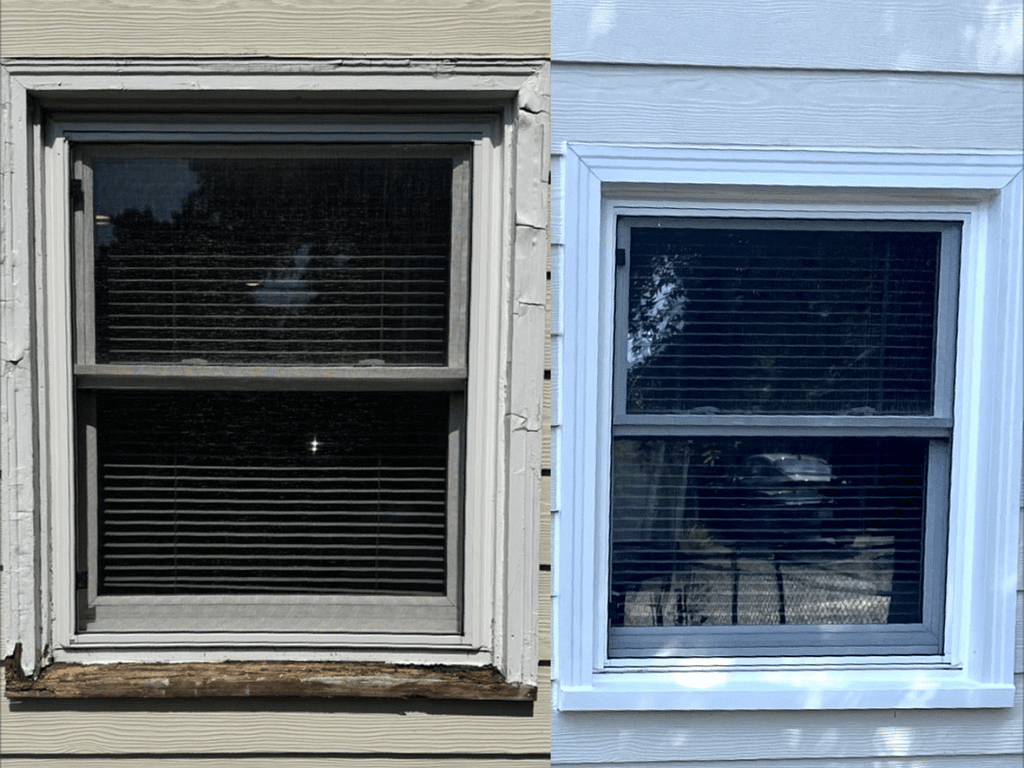
When the deterioration is localized and enough solid wood remains, wood window repair may allow us to repair the affected area while preserving more of the existing window.
8. Drafts Around a Window
Feeling cold air near a window does not automatically tell us which part has failed.
The source may be:
- A sash that does not close completely
- Worn weatherstripping
- Alignment problems
- Gaps around operating components
- Deteriorated wood
- A problem around the frame or opening
The location of the air movement matters.
Before assuming the entire window needs replacement, it is worth determining whether the problem belongs to an adjustable or replaceable component.
9. A Window That Will Not Close Completely
A window that stops short of closing can create several problems at once.
The lock may not engage correctly. Weatherstripping may not make consistent contact. Hardware may also be placed under additional stress.
Possible causes include:
- Sash drag
- Hinge problems
- Balance failure
- Track resistance
- Operator issues
- Swollen wood
- Alignment problems
Do not use the lock to force a poorly aligned sash into position.
The closing problem should be corrected first.
Why These Problems Matter Before a Minnesota Winter
Windows in Blaine go through large seasonal temperature changes along with snow, ice, moisture, and repeated freezing and thawing.
Winter does not cause every window problem.
What colder weather often does is make an existing issue easier to notice.
A slightly misaligned sash may become harder to move.
A failed insulated glass unit may look more obviously foggy.
Existing moisture damage may become easier to see.
Hardware that was already wearing out may become more difficult to operate.
Checking these symptoms before the coldest part of winter gives you a better picture of the window’s condition before the problem becomes harder to manage.
A Window Problem Does Not Automatically Mean Replacement
One of the first things we look at is whether the problem is limited to a repairable component.
Possible repair options may include:
- Glass replacement
- Insulated glass replacement
- Operator repair
- Balance replacement
- Lock or latch repair
- Sash repair
- Localized wood repair
- Hardware replacement
We usually start considering complete window replacement when deterioration affects several connected parts, the main frame or opening is compromised, or individual repairs are no longer likely to provide a practical result.
The condition of the complete window should guide the decision, not its age alone.
What Should You Photograph Before Requesting an Estimate?
Clear photos can help us understand what type of window and problem you have.
Useful photos include:
- The complete window from inside
- The specific problem area
- Broken or foggy glass
- Cranks, locks, balances, or other hardware
- Damaged sash or wood
- Manufacturer labels
- Part numbers or stamped markings
- The surrounding opening when visible deterioration is present
You do not need to take the window apart just to photograph a component.
Clear photos of the assembled window and any visible labels are usually more useful.
Window Repair in Blaine Before Winter
If you notice a window becoming difficult to operate, fogging between panes, damaged glass, failing hardware, sash problems, or deteriorated wood, it is worth finding out what is causing the problem.
We provide window repair in Blaine, MN for glass, hardware, sashes, wood components, and other common window concerns.
When the existing window can reasonably remain in service, we look at the repair options first.
When the frame, opening, or several connected components have deteriorated enough that replacement becomes more practical, we explain what we found and why.
Frequently Asked Questions
Should I repair a window before winter if it is still working?
If the window is becoming difficult to operate, does not close properly, has damaged glass, or shows another developing problem, it is worth having the cause evaluated before colder conditions make the issue more noticeable.
Why does my window become harder to open when the weather changes?
Changing temperature and moisture conditions can affect wood, alignment, weatherstripping, and operating components. The actual cause should be identified before parts are replaced.
Does fog between the panes mean I need a new window?
Not necessarily. If the insulated glass unit has failed but the sash and frame remain suitable, the glass unit may often be replaced without replacing the complete window.
Should I force a frozen or difficult window open?
No. Excessive force can damage cranks, operators, hinges, locks, sashes, or glass. The source of the resistance should be identified first.
Can a rotted window be repaired before winter?
Sometimes. Localized wood deterioration may be repairable when enough solid material remains. More extensive damage may require a broader repair or replacement evaluation.
How do I request a window repair estimate in Blaine?
Send clear photos of the complete window, the problem area, and any visible manufacturer or hardware information. That helps us understand the window before determining the next step.
Have a Window Problem in Blaine?
If you are unsure whether your window needs glass repair, hardware service, sash repair, wood repair, or complete replacement, we can evaluate the condition and explain the practical options.
For a faster estimate, send clear photos of the complete window and the problem area.
Call 612-240-0772 or request an estimate.